Category: Military28.10.2026
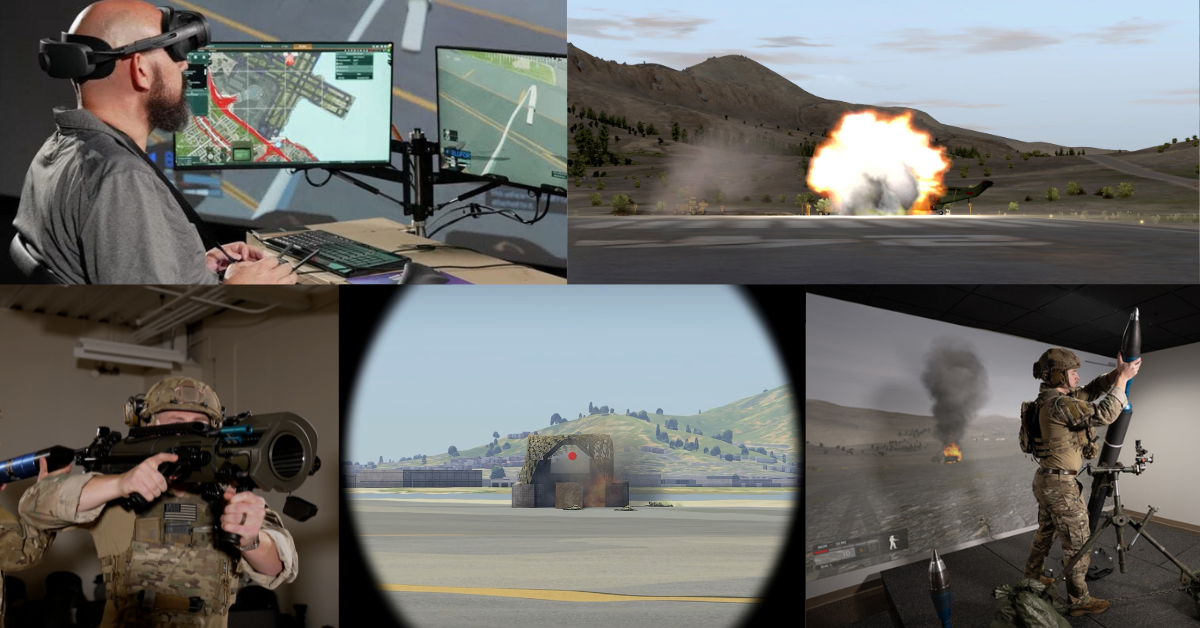
Virtual reality (VR) is completely reshaping modern military and defense training in terms of logistics, costs, safety, and even resource requirements. Modern VR training environments solve all these problems by being immersive, scalable, and repeatable. Below, we explain how innovative businesses like InVeris are driving the next generation of military readiness.
Traditional training programs have prohibitively high costs due to live-fire exercises and field simulations, high personnel travel and coordination demands, and the natural wear, tear, and availability of equipment. There are also quite a few safety and environmental risks and an inherent difficulty replicating complex or rare scenarios.
VR systems have an impressively high sense of immersion and realism, can safely be repeated with no physical risk, and involve unlimited scenario variability. Combined with geographically distributed participation and a lack of real travel, fuel, or ammo consumption, all of these benefits mean a significantly lower average cost per trainee over time.
The operational benefits of virtual reality encourages consistent skill development across large units and enhanced readiness for complex missions. Officers can also use such VR systems to have better decision-making under stress, faster learning retention, and controlled exposure to rare or extreme events.
InVeris’ fats® VR focuses on high-fidelity weapons training with ballistics using recoil kits and recoil-enabled simulators. Their system also simulates real physical environments as well as depict live team members using computer generated imagery (CGI) virtual characters, avatars, and assets.
VR programs designed for IED detection in realistic terrain involve bomb disposal procedural training as well as robotics and remote systems handling so that EOD & Search operations can be completed quickly and with ease.
Technicians can now practice assembly, repair, and inspection using VR-guided models with better equipment maintenance and a reduced reliance on real hardware.
VR flight simulators allow for cockpit familiarization while improving weapon system operation. Customizable scenarios include emergency response practice as well as multi-aircraft mission coordination.
Tank and armored vehicle operation can also be easily simulated with modules for off-road mobility training and scenarios for a range of convoy and escort missions.
Ship bridge operations can be simulated to train navigation in extreme weather plus all the basic port entry, docking, and combat operations officers would want to work on.
LVC systems let soldiers across different bases train together in the same virtual battlefield, allowing for interoperability across branches (Army, Navy, Air Force, Marine Corps) and an integration of real equipment with virtual battlespace.
InVeris’ LVC ready simulators specifically create modular environments that support real-time multi-user operations with after-action review tools and helpful analytics.
Multi-site mission planning is also possible thanks to VR tech with built-in terrain familiarization and the possibility of pre-mission briefings in 3D synthetic environments.
Drone piloting scenarios are also available with sensor interpretation and repeatable, no-risk models for high-risk reconnaissance missions.
Weapon system prototyping can be explored through VR systems to test ergonomics and other human factors. These equipment models can provide wear analysis and simulate realistic equipment durability.
Multi-viewpoint immersive 3D design review is also available with many virtual reality systems so that remote collaboration between defense contractors and military units can be facilitated.
VR also aligns with Gen Z learning preferences by turning gaming familiarity into military readiness. Video games based on realistic military combat are very popular in most markets and train potential recruits even if modern VR models are more accurate.
VR military and defense programs can even be used as a recruitment tool by allowing potential recruits to engage with realistic and interactive simulations instead of just using their imagination.
InVeris’ fats® system utilizes recoil-enabled weapon simulators with lifelike weapon physics so that officers can train their ballistic accuracy. This program uses a patented integrated marksmanship and judgmental model with a lot of built-in custom scenario development so that officers can practice their aim and high-stakes, real-time decision-making.
Inveris’ innovative VR models use power-wall displays and reconfigurable shoot houses to create synthetic training ecosystems that are fully immersive as well as incredibly customizable. Live team members are represented by realistic avatars and assets modeled using CGI technology. InVeris’ fats® system is also constantly releasing new environments to adapt to the user’s specific needs.
InVeris’ patented systems also track accuracy, reaction time, decisions, and communication. These after-action review (AAR) tools allow for objective skill progression measurement that instructors can use to decide when training has been sufficiently completed.
VR represents a critical evolution in military training and solutions like InVeris’ fats® are bridging the gap between traditional training and future-ready defense forces. The most effective programs combine live, virtual, and constructive training to enhance readiness, safety, and capability.
Fill in the form below and we'll send a link for you to download the White Paper to your inbox.
Fill in the form below and we'll send a link for you to download the White Paper to your inbox.
Fill in the form below and we'll send a link for you to download the White Paper to your inbox.