Category: Public Safety13.10.2026
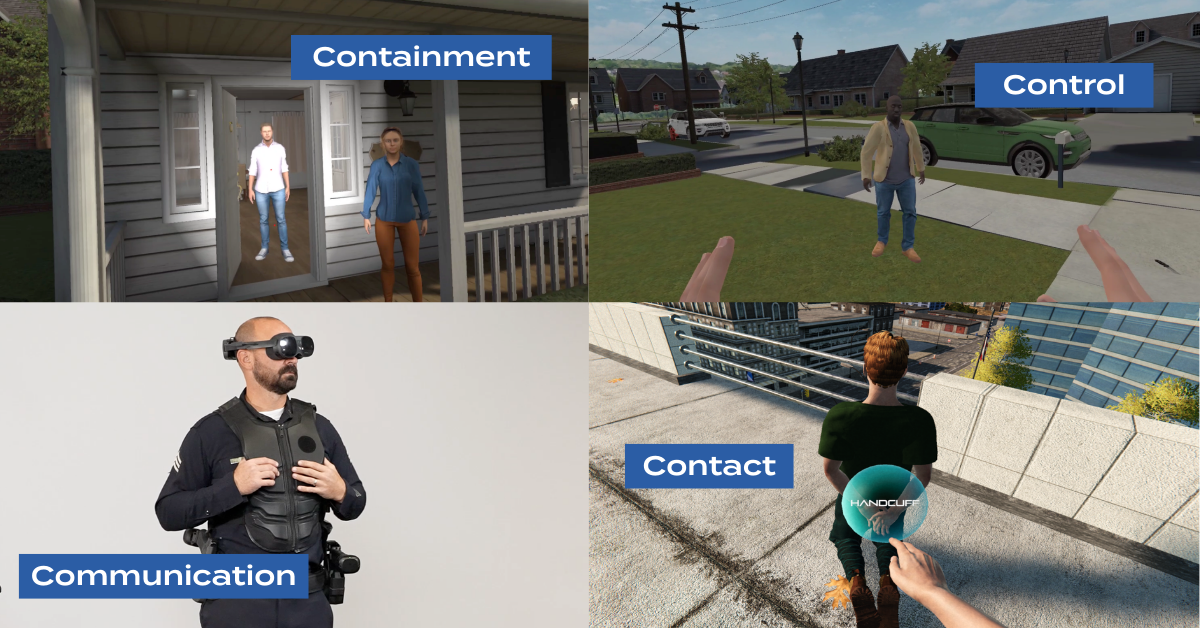
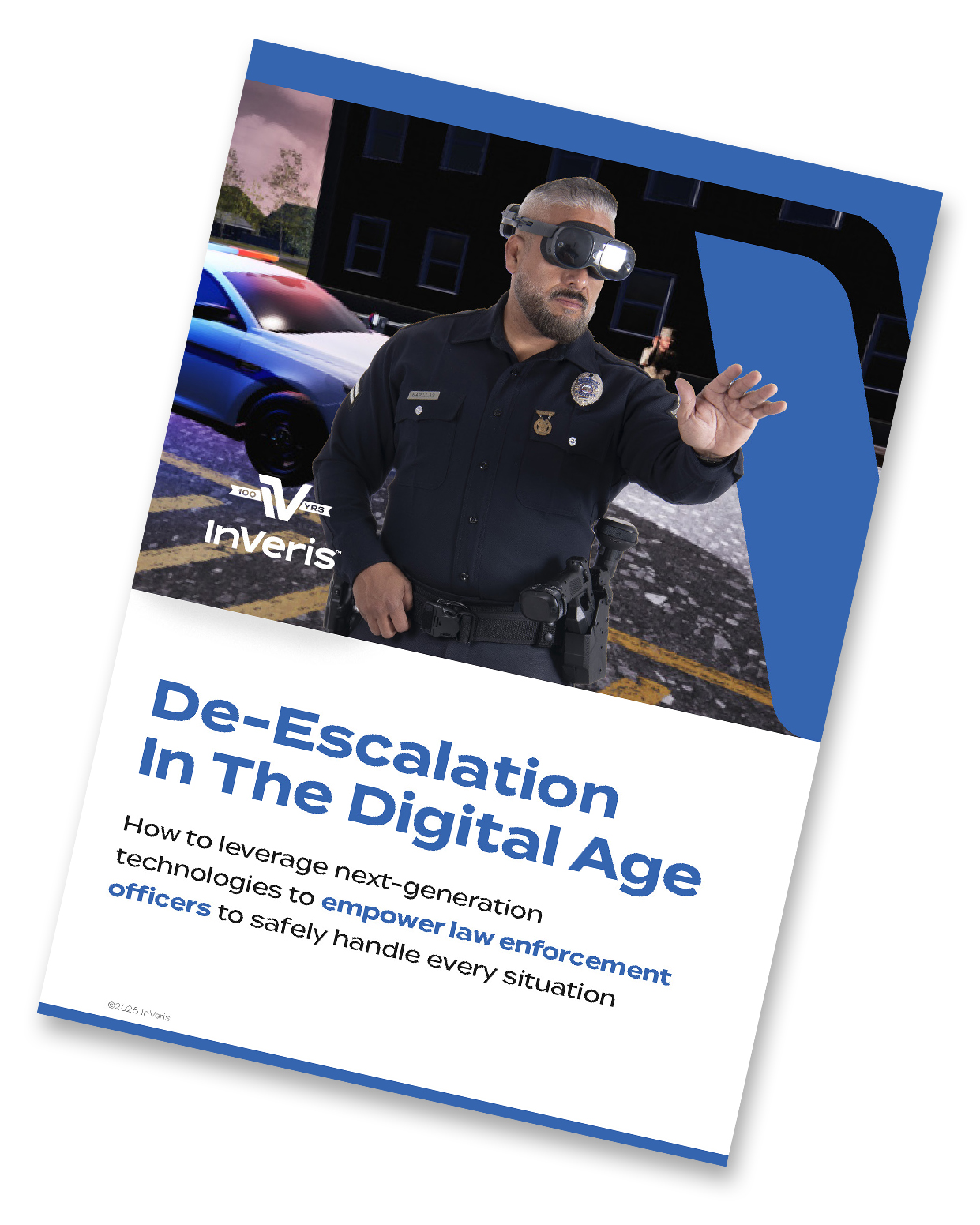
De-escalation is a foundational tactic in modern policing, which requires a growing emphasis on communication, judgment, and minimizing use of force. Below, we provide a comprehensive overview of the Four Cs framework of de-escalation used in law enforcement training.
Containment refers to the act of creating a controlled environment in order to reduce risk. The dual goal here is to prevent the subject from accessing weapons, victims, or escape routes and to protect bystanders from entering danger.
Law enforcement officers contain the situation by establishing safe zones, limiting unnecessary movement to keep the subject stable, and to distance and position their own body whenever possible to keep the situation from escalating.
These actions generally help shift from reactive decisions to deliberate communication strategies while also providing officers time to assess and plan for their next course of action.
Control refers to the act of assessing the threat of the suspect and maintaining control without escalation. The police office starts by evaluating any presence of weapons, identifying vulnerable parties (victims, bystanders, children), and then determining the subject’s physical and emotional state.
The police officer should then try not to escalate the situation any further by maintaining a balanced stance and calm posture while keeping his or her hands visible. They should also avoid any sudden movements, overcommands, or aggressive tones while speaking.
The final part of control is for the police officer to recognize when conditions allow for continued de-escalation attempts. He or she should know when to continue verbal engagement, when de-escalation is no longer viable, and when supervisory input and team coordination is necessary.
Skillful communication is required for de-escalation in law enforcement, starting with officers maintaining a calm tone of voice while using clear language at a slow pace. They should also do whatever they can to avoid using threats, ultimatums, or any other emotionally charged phrases. Instead, an officer should use simple and direct instructions to pacify the subject.
In terms of nonverbal communication, officers should maintain consistent eye contact and position their body in a non-aggressive way. They should keep an open stance and safe distance from the subject while avoiding any gestures that could increase perceived aggression.
Active listening is also a key part of effective officer communication. Officers should allow subjects to vent without interruption, use natural pauses to acknowledge their feelings and concerns, and focus on reflective statements to build rapport.
Contact refers to establishing and maintaining effective connection with the subject. The officer should ensure that the person can hear and understand them and remove any unnecessary physical or environmental barriers. Supervisors should do their best to use officers with rapport-building strengths.
Proficient officers should be able to recognize any factors that could impact good contact, including intoxication or drug influence, language barriers, developmental or cognitive impairments, and any mental health crises. For the sake of maximum understanding, calm repetition should be the focus and supervisors need to be ready to change out officers or even to incorporate trained crisis intervention specialists as needed.
In real scenarios, officers should follow the four Cs in a step-by-step flow. Containment establishes safety for everyone involved, and then control sets the best conditions possible for safe decision-making. Communication drives progress and rapport between the officer and the subject, and then the concept of contact ensures that the subject is actually engaged throughout the interaction.
Officers may cycle through the four Cs repeatedly as needed, for every situation will be complex and unique. One of the framework’s greatest strengths is that it is so adaptable to unpredictable environments. A big part of law enforcement de-escalation training is using these four concepts in a mix of ways to address real-life situations.
The most basic way to help officers build the four Cs is through role-playing and controlled practice scenarios. These models recreate scenarios that officers may regularly encounter so that they can focus on how each person communicates under stress and then offer ways the training officers (and their supervisors) can improve their own de-escalation tactics.
Simulation training that includes virtual and augmented reality technology is a new and effective way to practice de-escalation thanks to realistic branching scenarios. Officers can use this tech to practice with unpredictable subject behavior while building judgment, restraint, and communication skills. Simulation and VR tech provides qualitative and quantitative data that supervisors can use to help officers work on certain aspects of their de-escalation skills.
Classroom and policy-based instruction is also always useful, especially when it comes to legal considerations, use-of-force guidelines, and various crisis intervention concepts. These basic setups help large numbers of officers learn the same information in a consistent manner so that everyone is on the same page.
Officers need to remember that de-escalation requires cooperation from subjects and that while officers set the conditions, subjects determine outcomes. The third thing they should remember is that consistent and varied practice is required to internalize the Four Cs of de-escalation in law enforcement.
The Four Cs provide a simple, actionable framework for effective de-escalation. Containment, Control, Communication, and Contact work together to reduce risk and improve outcomes, and they can be adapted to such a wide range of situations that officers might come across. Ongoing training ensures officers are prepared for real-world interactions, and any program should be built on these four fundamental concepts.


Fill in the form below and we'll send a link for you to download the White Paper to your inbox.
Fill in the form below and we'll send a link for you to download the White Paper to your inbox.
Fill in the form below and we'll send a link for you to download the White Paper to your inbox.