Category: Public Safety07.10.2026
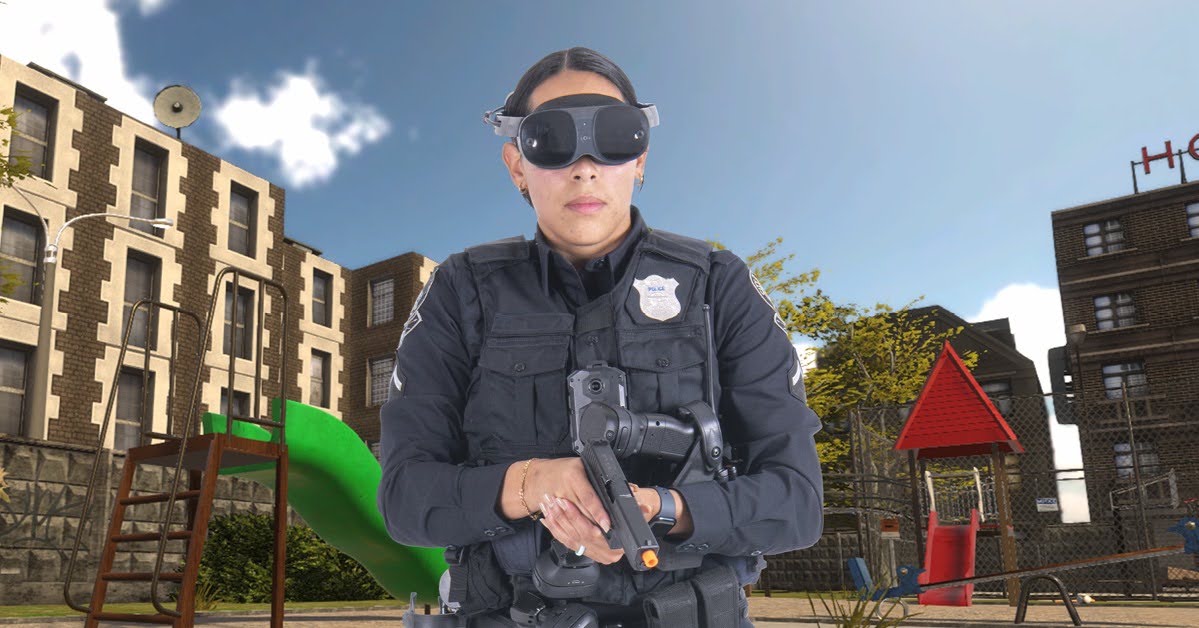
School Resource Officer (SRO) training are courses that must be taken to ensure SROs are competent at their school-specific positions. In recent years SRO roles have expanded beyond enforcement (education, prevention, mentorship) and there is a rising need for specialized, consistent training across districts. Virtual reality (VR), Augmented Reality (AR), and other simulation technologies are pivotal for modernizing law enforcement education.
The first major qualification for becoming an SRO is naturally completing training at a state-certified police academy as well as all required law enforcement certification. To be eligible, all SRO applicants must complete the standard background check, drug screening, and physical requirements while having a clean disciplinary record. Patrol experience is also highly recommended.
Given the setting, much of National Association of School Resource Officers (NASRO) basic SRO training focuses on building successful relationships with diverse students and ways in which these officers can support students with disabilities and behavioral health challenges. Every student population is unique and so are the challenges they bring to school, so it is key for SROs to be trained to work with and handle every kind of student that could be at their school.
NASRO basic training also involves officers learning all relevant school law and any legal responsibilities that officers and the school has when it comes to de-escalating situations and using force if necessary. SROs must constantly adapt and improvise to the specific scenarios in which they are placed, but local, state, and federal law must be followed to the letter at all times. NASRO basic training covers all the major law statutes that an officer needs to know before they begin their SRO position.
During training, SROs also learn a variety of public safety topics, including digital safety, human trafficking, mental health, and substance abuse while focusing also on de-escalation, behavioral threat assessment, emergency operations planning, and armed assailant response. There are so many different facets that go into an officer maintaining public safety, stopping crime before it happens, and responding to each unique scenario as needed.
SROs need to work on instruction skills so that they can properly direct students as well as collaboration skills so that they can work with other officers to efficiently and safely handle any scenarios that come their way. SROs must work with students, teachers, and a variety of school staff in addition to fellow officers in order to properly do their job. Engaging with feedback from both students and staff is also a regular part of being a good school resource officer.
Threat and crisis response is one of the most critical areas for SROs to receive advanced training, because a range of active scenarios could occur that officers will need to either de-escalate or terminate in a way that is specific to each situation. This type of advanced training can be attacked on several different levels, including updating officers on new laws as well as providing training for new and unique threats and crises.
There are also many different behavioral and cultural factors that affect how a specific school functions and how certain threats and crises will naturally arise or be handled by officers, so some specialized training in this area is often needed. SROs do not need to be nor can be trained psychologists or anthropologists, but this type of advanced training helps officers work on reacting to specific behavioral and cultural scenarios within school environments.
Over time, SROs will need to get increasingly proficient at technology and cybersecurity in general in order to prevent things from escalating and also so that they can learn how to handle certain crises once more advanced technological issues have been introduced. Students are increasingly adept at using technology, and various cybersecurity measures can be taken to prevent student endangerment if officers are properly trained.
SRO training is typically delivered through a mandatory in-person course that takes place all day over five days. The NASRO Basic School Resource Officer Course is a forty-hour (40) training program that is designed to prepare school resource officers as well as other law enforcement officers and school safety professionals to effectively fulfill their roles in the school setting.
Under NASRO’s Triad Model of school-based policing, officers will learn all of the basic information they need to understand a student’s needs, all legal responsibilities, and the many different factors that go into preventing and de-escalating various threats and crises in alignment with local school policies.
Every state within America has its own specific requirements for SRO training, including the required amount of training hours and district policy alignment as well as regular continuing education requirements and annual legal updates. Local SROs will receive training that is specific to the state and region in which they are being deployed.
To remain eligible, all SROs must routinely get recertified according to current cycles as well as work with threat response updates, maintain a certain standard of documentation quality, and respond to any relevant student and staff feedback. SRO training is thus an ongoing process that must be routinely evaluated rather than merely being completed one time at the beginning of an officer’s career.
VR is transforming SRO training by providing a safe and reliable environment where officers can practice high-stakes situations in repeatable, controlled scenarios. It has been proven that immersive learning improves retention, and VR also removes quite a few different logistical barriers to realistic training.
There are many different VR scenarios already available for SRO training, including de-escalation in classroom settings, mental health crisis simulations, bullying and conflict resolution, active threat scenarios, parent–student conflict simulations, and courses that help officers recognize trauma signals.
Using virtual or augmented reality during SRO training helps improve officer decision-making under pressure, trains officers on both empathy and communication, provides valuable data on response time & performance, and allows for individualized feedback based on actions taken during training exercises.
VR can also be used to complement traditional SRO training by blending newer tech with scenario-based practice. This blended approach can help standardize skills across districts, enhance collaboration with school staff, and support a model of continuous improvement for all staff.
Using InVeris for SRO training means that real-time analytics and performance data are collected during various scenarios, meaning that decision-making, communication, and reaction time can be measured and so that instructors have measurable performance insights they can respond to. InVeris’ simulations can also be tailored for specific school districts, specific school layouts, and unique local risks.
InVeris helps enhance SRO training by providing realistic, school-relevant simulations that classroom learning simply cannot replicate. These VR-assisted training models help officers practice de-escalation with students, parents, and staff and support critical thinking rather than just focusing on tactical responses. Blended models that use InVeris’ unique systems also ensure that consistent and reliable training is available across even the largest school districts.
Using InVeris for SRO training means that real-time analytics and performance data are collected during various scenarios, meaning that decision-making, communication, and reaction time can be measured and so that instructors have measurable performance insights they can respond to. InVeris’ simulations can also be tailored for specific school districts, specific school layouts, and unique local risks.
In order to be effective, SRO training must always be student-centered, legally grounded, and safety-driven. Virtual and augmented reality systems, especially platforms like InVeris’ fats®, significantly elevate preparedness across the board. The future of SRO training combines classroom education with immersive, scenario-based learning so that officers are as prepared as they possibly can be for every threat and crisis that may come their way.
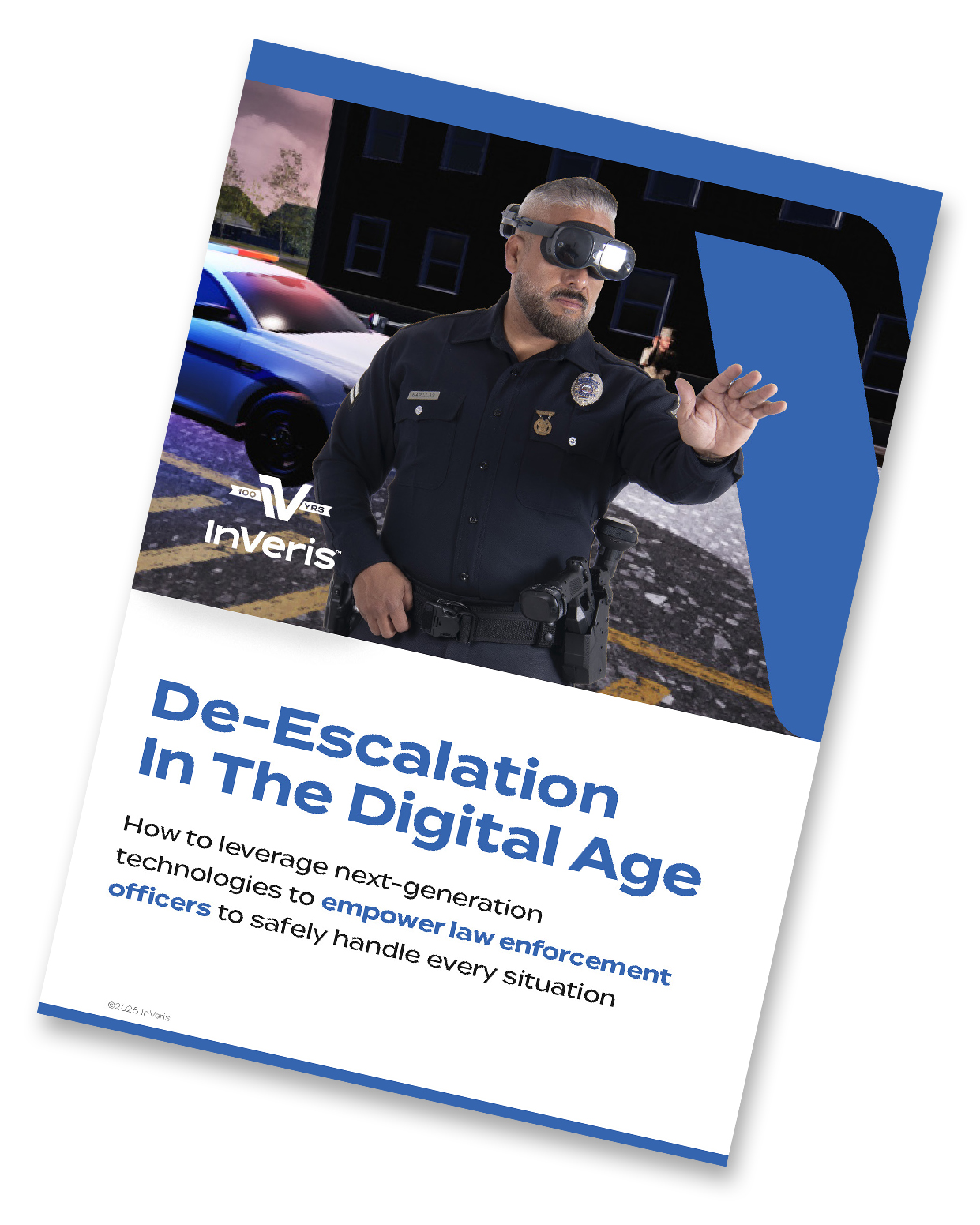
Fill in the form below and we'll send a link for you to download the White Paper to your inbox.
Fill in the form below and we'll send a link for you to download the White Paper to your inbox.
Fill in the form below and we'll send a link for you to download the White Paper to your inbox.