Category: Commercial27.01.2026
Types of Shooting Ranges Explained: Indoor vs. Outdoor vs. Modular
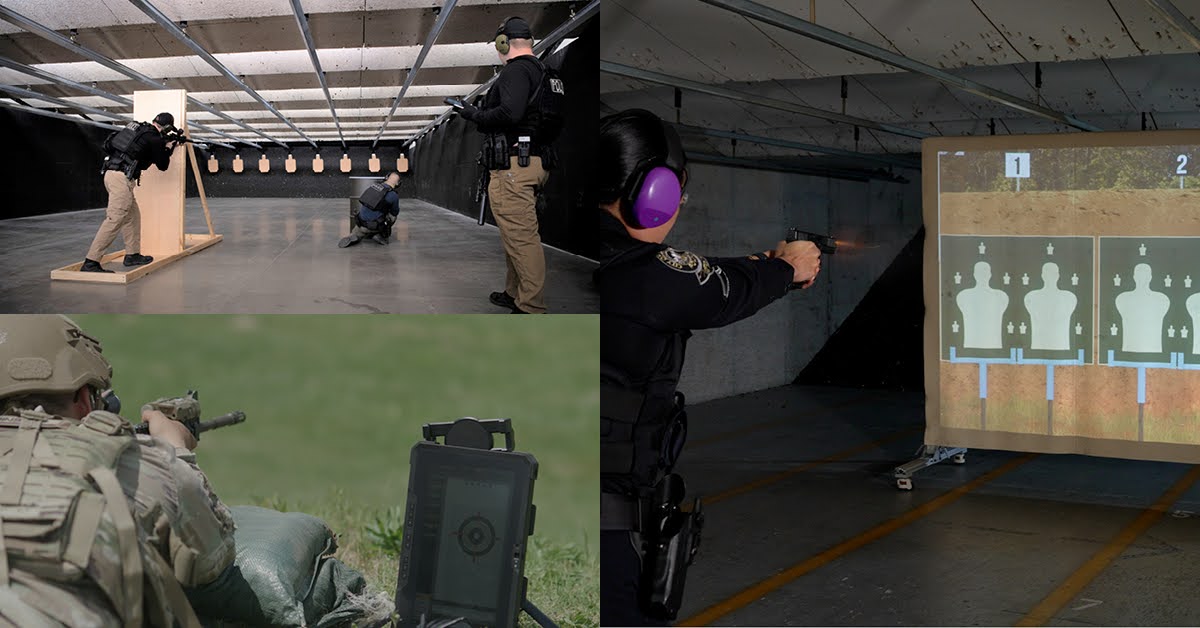
Providing your agents and officers with the practical tools and skills they need in the field is essential to ensure their safety and the public they’ve sworn to protect. Firearms and tactical training are a critical part of this process.
However, when choosing between different training exercises, you’ll also need to decide on the optimal environments to conduct them in. When choosing between shooting range options, you typically have three different options you can go with – indoor, outdoor, or modular.
Each method has its own benefits and considerations worth knowing about, which can help you to make the best choice for your agency. Below, we’ll break down the differences of each to help you choose the option that’s right for you.
Indoor Shooting Ranges
Indoor shooting ranges are fully enclosed, climate-controlled settings used to conduct live fire training. These ranges can be located in a wide range of urban and suburban areas and vary in both size and their capabilities for creating simulated training scenarios.
Benefits
- All-weather, Year-round Access – The great thing about indoor shooting ranges is that they’re available to book all year-round and aren’t impacted by weather conditions. This can be incredibly beneficial in areas that regularly have to deal with hot or icy conditions and creates a more relaxed atmosphere to train in.
- Controlled Environment – Indoor shooting ranges offer more controlled settings to train officers, tactical units, and new recruits. This allows trainees to focus more on their training without having to worry about distractions from outside noise that can make it harder to hear the trainer’s instructions.
- Improved Safety – While all shooting ranges have various safety measures in place, indoor ranges have additional safety features such as video monitoring equipment and motion sensors that keep trainers aware of everything happening in and around the range.
Considerations
- Limited Shooting Distances – In an indoor range, trainees are limited to the layout of the building. This means ranges are typically shorter than found in outdoor ranges and typically cap out at around 25 to 50 yards. However, in some cases, certain indoor ranges may provide extended ranges for marksmen training, but accessibility varies based on location.
- Ventilation Concerns – Because of the lead particles and fumes that are released when discharging firearms, proper ventilation can be a concern when using indoor ranges. While all indoor ranges have HVAC systems to properly circulate and filter air, athletes or individuals with other breathing conditions may find it harder to perform effectively in these environments.
- Restrictions on Caliber or Ammo Type – Because of the shorter range distances they can support, indoor ranges aren’t suitable for training with certain types of ammunition. For the safety of surrounding buildings, most indoor ranges will specify allowable ammunition calibers, which are typically less powerful than those permitted by outdoor ranges.
Outdoor Shooting Ranges
Outdoor shooting ranges are open-air facilities with large, expansive training areas for firearms training. These are typically located in much more rural settings and are designed to support a much wider range of shooting disciplines.
Benefits
- Realistic Training Conditions – Outdoor ranges provide a more realistic firearms training experience due to their susceptibility to various temperatures, weather conditions, wind, light variations, and surrounding noises. This can be beneficial when trying to give trainees a more natural environment to train in that mimics the conditions they’re likely to experience when in the field.
- Longer Distance Support – When training snipers or mirroring long-range engagements, outdoor shooting ranges provide much more space to practice and master rifle marksmanship safely and at greater distances.
- Fewer Caliber Restrictions – Because outdoor ranges are often positioned in rural areas with very few surrounding buildings, they’re much more flexible when it comes to using higher-caliber weapons and ammunition.
Considerations
- Weather-Dependent – One drawback of using an outdoor range is that inclement weather can make it difficult to schedule training sessions. This unpredictability can cause issues when coordinating training based on officer schedules and can lead to a backlog if too many agencies are trying to book the same locations.
- Limited Facilities – Outdoor ranges typically have very few amenities and lack the same comforts of indoor facilities. While this shouldn’t impact shorter training sessions used for certification courses, it may prove to be a challenge when coordinating longer training sessions if there isn’t direct access to restrooms, classrooms, or other facilities.
Modular & Specialty Shooting Ranges
Modular and specialty shooting ranges offer much more flexible formats for supporting agency firearm training. These ranges are custom, portable units that can either be set up and torn down or prepared as a permanent, indoor training simulation.
These types of shooting ranges can be customized to meet the agency’s needs and utilize large projector screens and specialized equipment to create highly immersive training scenarios. While these ranges can be explicitly used for firearms training, they can also serve as a comprehensive training aid for officers, providing real-time feedback on de-escalation techniques, proper form, and other essential training metrics.
Benefits
- Scalable and Rapidly Deployable – Modular shooting ranges are highly flexible and can be put up or taken down wherever it’s most convenient. This is a great solution for establishing temporary training sites without needing to schedule sessions at other indoor or outdoor ranges.
- Ideal for Law Enforcement Training – Because modular ranges with specialized training equipment can be customized based on agency needs, they are often a perfect solution for law enforcement and military training exercises. Instead of needing to rely on live ammo for training drills, laser-based firearm systems allow trainees to conduct multiple training sessions without adding significant costs to the agency.
Considerations
- Higher Upfront Cost – One of the larger considerations when investing in your own modular range is that there is a higher upfront cost for equipment that you don’t need to factor in with traditional indoor/outdoor ranges. However, over time, this investment can pay off, considering you won’t need to worry about the cost to book new facilities or purchase additional ammunition.
- Limited by Transportability – Depending on the size of your agency, you may need to consider the logistics associated with moving modular ranges to and from different facilities. There is also the setup and tear-down time to consider, which can be quite extensive depending on the type of equipment you choose to work with.
In Summary
Regardless of your agency’s needs, there are multiple ways you can facilitate firearms training sessions for your officers, tactical units, and new recruits. While each format has its own list of benefits and considerations, creating a hybrid training approach can be an optimal strategy that helps you balance a wider range of training needs for your agency.
By leveraging the unique strengths of each training type, you can create a much more comprehensive program that better prepares your officers for the unpredictable nature of their jobs.