Category: Military10.02.2026
Diverse military training programs are absolutely essential for ensuring unit readiness and preparation for the unpredictable nature of combat. There are many different types of military training, from basic training that establishes necessary skills, specialized training for advanced operations, and advanced programs for special candidates. Physical, mental, and emotional preparation are vital for building effective units, and below, we’ll go over how each type of training prepares soldiers for active duty.
Basic training is a fundamental step for any soldier, and exists in the following forms:
Army Basic Combat Training (BCT) is a 10-week program that takes place at one of four main sites: Fort Benning in Georgia, Fort Jackson in South Carolina, Fort Leonard Wood in Missouri, or Fort Sill in Oklahoma. There are five key phases of Army BCT: Reception, Yellow (Weeks 1-2), Red (Weeks 3-4), White (Weeks 5-7), and Blue (Weeks 8-10). BCT places a heavy focus on soldier fundamentals, combat fitness, weapons training, and field exercises.
Marine Corps Basic Recruit Training is the basic training regimen for the US Marine Corps, and consists of a 13-week program at Parris Island in South Carolina or in San Diego, California. Marine Corps Basic Recruit Training prioritizes physical fitness, leadership, and hand-to-hand combat. Its final feature is “The Crucible,” a grueling 54-hour endurance test that stretches the trainee’s skills to the limit. Passing Marine Corps Basic Recruit Training allows trainees to transition to further specialized training
Navy Boot Camp is a 9-week training program that takes place at Recruit Training Command in Great Lakes, Illinois. A strict training regimen that evaluates physical fitness, firefighting, seamanship, and weapons training, it transitions trainees from soldiers to sailors, requiring an intense shift of mindset. Navy Boot Camp ends with two capstones: the Official Physical Fitness Assessment (PFA) and Battle Stations, an intense evaluation of how seamen will react to a variety of naval scenarios.
Air Force Basic Military Training is a seven-and-a-half week program that takes place at Lackland Air Force Base in San Antonio, Texas. Air Force training focuses on basic airman skills such as weapons handling, combat lifesaving, airmanship skills, and field training exercises. Two major features of Air Force training are the PACER FORGE, a two-day scenario-based deployment designed to reinforce and evaluate trainee skills, and “gas chamber” training, where trainees are taught how to survive and operate in a Chemical, Biological, Radiological, and Nuclear (CBRN) contaminated environment.
Space Force Basic Military Training is a 7.5-week training program that takes place at Joint Base San Antonio in Texas. Space Force training is essentially similar to Air Force Basic Military Training, inculcating and evaluating similar skills to airmen in the added context of space operations. Space Force training also includes 21 hours of training in emotional intelligence, Space Force Structure, and senior-leader briefings on operations.
Coast Guard Recruit Training is an eight-week course that takes place at the Coast Guard Training Center in Cape May, New Jersey. The components of Coast Guard training include a focus on physical fitness, water survival, firefighting, and military operations, all entry-level skills required to serve as a junior enlisted member of the Coast Guard. Recruits who pass Coast Guard training receive assignments in the Coast Guard and can eventually apply for advanced training.
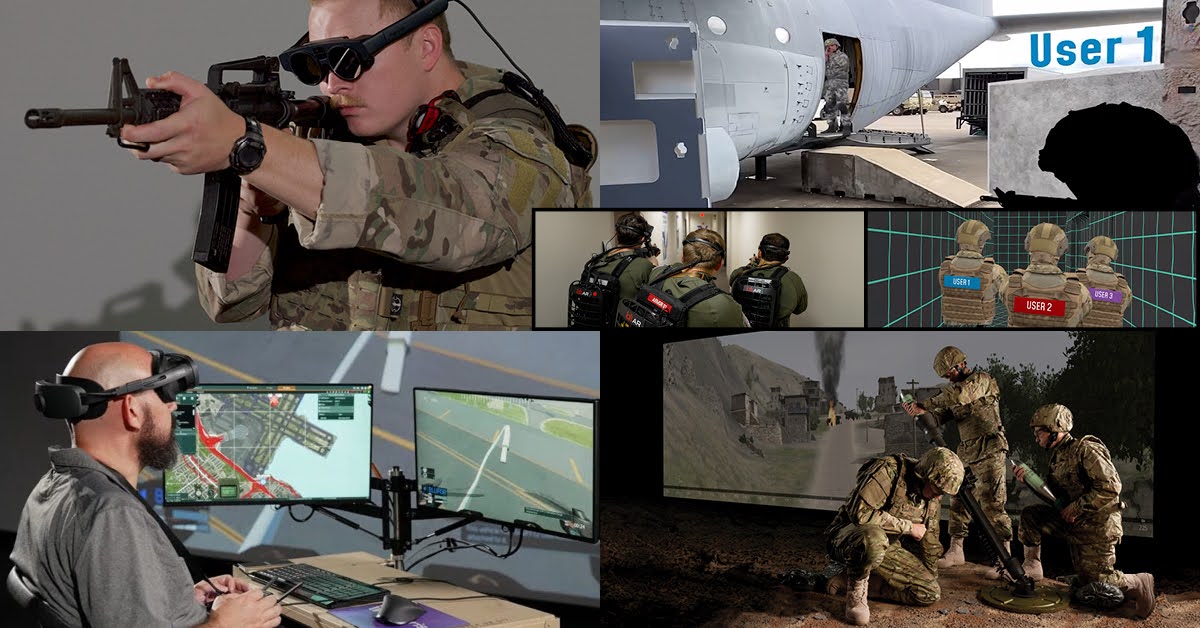
TAR and VR training are an advanced form of military training that many recruits experience in various branches of the military. This training enhances situational awareness and trains recruits through AR and VR technologies, which simulate realistic combat scenarios. TAR and VR training integrates advanced systems for combat training, targeting, and decision-making.
Officer Candidate School (OCS) is a program in various branches of the military that acts as the transition from basic training to officer-level leadership training for select candidates based on competence and leadership abilities. OCS trains prospective recruits for work in command roles and the reception of higher ranks. OCS focuses on leadership, tactical operations, and decision-making under pressure.
Advanced Individual Training (AIT) is specially-tailored training designed for specific military occupational specialties (MOS) such as Cyber Operations Specialists, Special Forces, and more. AIT prepares soldiers for specialized roles within the military that execute high-level operations, undertake dangerous missions, and are tasked with military work requiring the highest level of skill.
Another form of training that utilizes virtual and augmented reality technology across different military branches is the Synthetic Training Environment (STE). STEs use simulation technology to create realistic, adaptable training scenarios that recruits can enter into safely while practicing key skills in a realistic environment. STEs allow for the training of entire units in complex combat environments without the risk of live operations.
One of the most important elements of military training involves strengthening soldiers’ psychological resilience and stress management skills. Almost all branches of the military offer and require training on how to handle mental pressure, stress, and combat-related trauma. Psychological readiness is vital for maintaining performance under duress, and even more so for transitioning effectively from active duty back to civilian life once deployment ends.
Team dynamics and cohesion training are essential to effective military operations, and are highly-emphasized at all levels of military training. Military training and boot camp helps soldiers develop teamwork skills to enhance cooperation and unit cohesion in the field. Training involves various techniques and exercises for managing interpersonal dynamics and fostering a strong team culture, such as collaborative obstacle courses, mutual problem-solving activities, and skill-building workshops.
There is an ongoing need for continuous skill development throughout a military career. Even experienced soldiers often need to return to training to sharpen existing skills or learn new procedures. Ongoing training also incorporates new technologies such as VR and AR, new and improved tactics, and real-world lessons into training regimens.
Improving methods of feedback and evaluation is another key step the military is taking to advance the effectiveness of training regimens. Many branches of the military now use comprehensive after-action reviews (AARs) to evaluate training outcomes, engaging in detailed discussions of training goals, actual outcomes, and plans for improvement. Incorporating feedback from exercises to improve future training and readiness is a key method behind the continuous development of military training.
Diverse training approaches are an essential aspect of improving unit readiness across all military branches. The evolving nature of military training, which now incorporates new technologies and procedures, helps to address emerging threats to the nation and improve military readiness for a variety of combat scenarios. While military training is improving, there is a continuous need for investment in training programs and new technologies like AR and VR to ensure ongoing military effectiveness in today’s rapidly changing world.


Fill in the form below and we'll send a link for you to download the White Paper to your inbox.