Category: Military23.01.2026
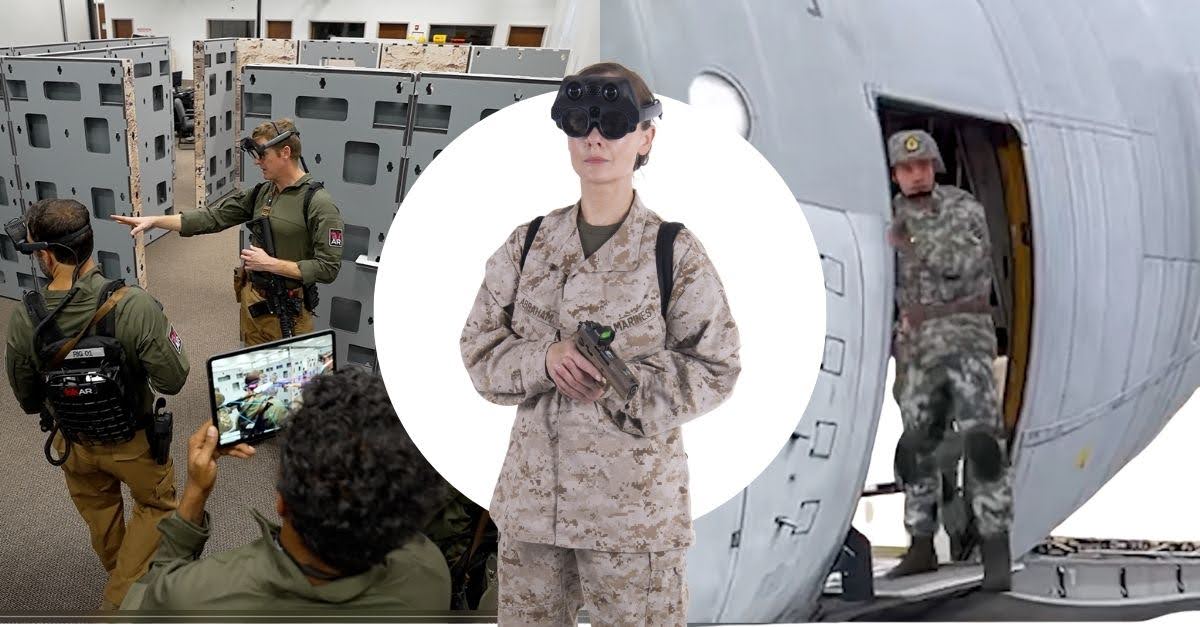
In recent years, augmented reality (AR) technology has become a prominent tool in the defense and military operations industries. AR technology is reshaping military training and operations by offering instructors and trainees newer and safer modes of realistic training. Let’s learn about some of the applications of AR in military training!
Augmented reality (AR) is a type of immersive technology that overlays digital information onto the real world via the use of specialized devices. AR is distinct from virtual reality (VR), which is an immersive technology that places the user in a fully virtual environment through the use of technology.
AR technology is a popular tool in military contexts. The military makes use of a wide variety of AR devices, including specialized AR headsets such as Microsoft HoloLens and IVAS, tactical AR glasses, integrated helmet displays, and heads-up displays (HUDs).
AR technology can be used to simulate combat in an urban environment. With AR devices, soldiers can see key digital data such as street maps, target locations, and even computer-generated enemies who appear overlaid on a physical training course.
Augmented reality can be used to help soldiers with flight, parachute, and navigation training. AR devices can provide pilots and parachuters with key information such as target markers, landing zone icons, and directional aids for navigation through difficult terrain.
AR can help soldiers handle their weapons correctly and improve their marksmanship. AR overlays can give trainees key information about their weapons and how to handle them, and can provide soldiers in combat or at shooting ranges with accurate targets and sighting for marksmanship.
There are a number of medical applications for augmented reality. AR headsets and devices given to medics can dispense critical information regarding wound care, patient vitals, nearby threats, and other important factors that impact medical operations in combat settings.
AR technology can assist soldiers who are engaged in CQC or deployed as snipers. AR can assist soldiers in close quarters scenarios such as urban, trench, and shoot house combat, and can provide detailed after-action reviews. AR can also assist snipers with targeting and positioning.
Augmented reality is extremely effective in reconnaissance and surveillance scenarios. AR provides soldiers with enhanced object recognition, can display key information like the speed of approaching vehicles, and can assist reconnaissance efforts by overlaying street names, compass points, and other navigational aids in the visual field.
With AR technology, soldiers can improve their tactical decision-making and command skills. The information AR provides gives commanders instant access to key data that can reduce decision time and allow for more informed tactics to be developed quicker, improving command drills.
AR devices offer the military a new way to improve CBRN training. With AR devices that analyze the environment, soldiers can receive quick and life-saving readings regarding nearby levels of dangerous chemical, biological, radiological, and even nuclear substances or toxins, allowing for quick action and evacuation from contaminated areas.
Augmented reality is a critical asset for soldiers working in real-time combat scenarios. AR devices overlay instant information onto the visual field, providing vital mission support through devices such as HUDs that give soldiers everything they need to respond quickly in the field.
Because AR technology is largely digital in nature, it can be repaired and maintained remotely, potentially even in the field. While physical equipment can prove life-threatening to repair in combat, many AR systems can be fixed remotely by off-site technicians, allowing soldiers to focus on combat during repair time.
AR can provide soldiers with critical navigational and situational guidance in the field. IVAS technology can provide soldiers with detailed terrain maps and layouts of building interiors, and drone-assisted mapping technologies can give soldiers on the ground important overhead views of vital geospatial data.
AR can be used to facilitate logistics and supply chain management. AR can give technicians step-by-step instructions for repair logistics and can also provide supply chain coordinators with tools such as “vision picking” and inventory assessment for key resources such as food, weapons, gear, and more.
AR represents a new frontier in communication and signal training. With AR technology, trainees and soldiers can fully immerse themselves in a shared augmented reality that facilitates communications such as battlefield commands and deployment instructions.
Beyond combat, augmented reality also has applications for emergency response and search and rescue operations. AR technology can simulate search and rescue or emergency response scenarios for training purposes and can overlay critical data such as schematics, danger zones, directional cues, and remote assessment onto the visual field in actual emergency scenarios.
As a digital system, AR has applications that extend into the realm of cybersecurity and information warfare. AR can create realistic virtual cybersecurity scenarios for trainees to practice with, and can provide cryptologic technicians and information systems technicians with key support and instructions in the event of a real-life cyberattack.
AR is an effective tool for managing military satellites and space operations. From a technical standpoint, AR can allow military personnel and astronauts to practice space repairs in realistic but safe earthbound settings, and can also offer real-time guidance, interactive visualization, and other key data related to satellite maintenance and repairs.
AR can be used to help the military engage in anti-terrorism and counter-insurgency exercises. Augmented reality can assist soldiers engaged in CQC with terror cells or in explosive ordnance disposal (EOD). Common counter-insurgency scenarios can be integrated into AR training regimens with ease.
Augmented reality can also help soldiers increase their psychological resilience and stress management. Exposure to realistic scenarios in training can help soldiers respond without panic to real-life combat, improving psychological outcomes.
An overlooked application of AR is language and cultural immersion training. In addition to combat data, AR can overlay important information such as foreign language translations and cultural data to help soldiers deployed overseas in understanding and empathizing effectively with native populations in countries of deployment.
Augmented reality is on the path to continued expansion as a military training and operations tool. With the advantages and applications of AR, militaries can build smarter, safer, more efficient armed forces. Alongside other technologies such as virtual reality, augmented reality is continually proving itself as the training and tactical tool of the future.










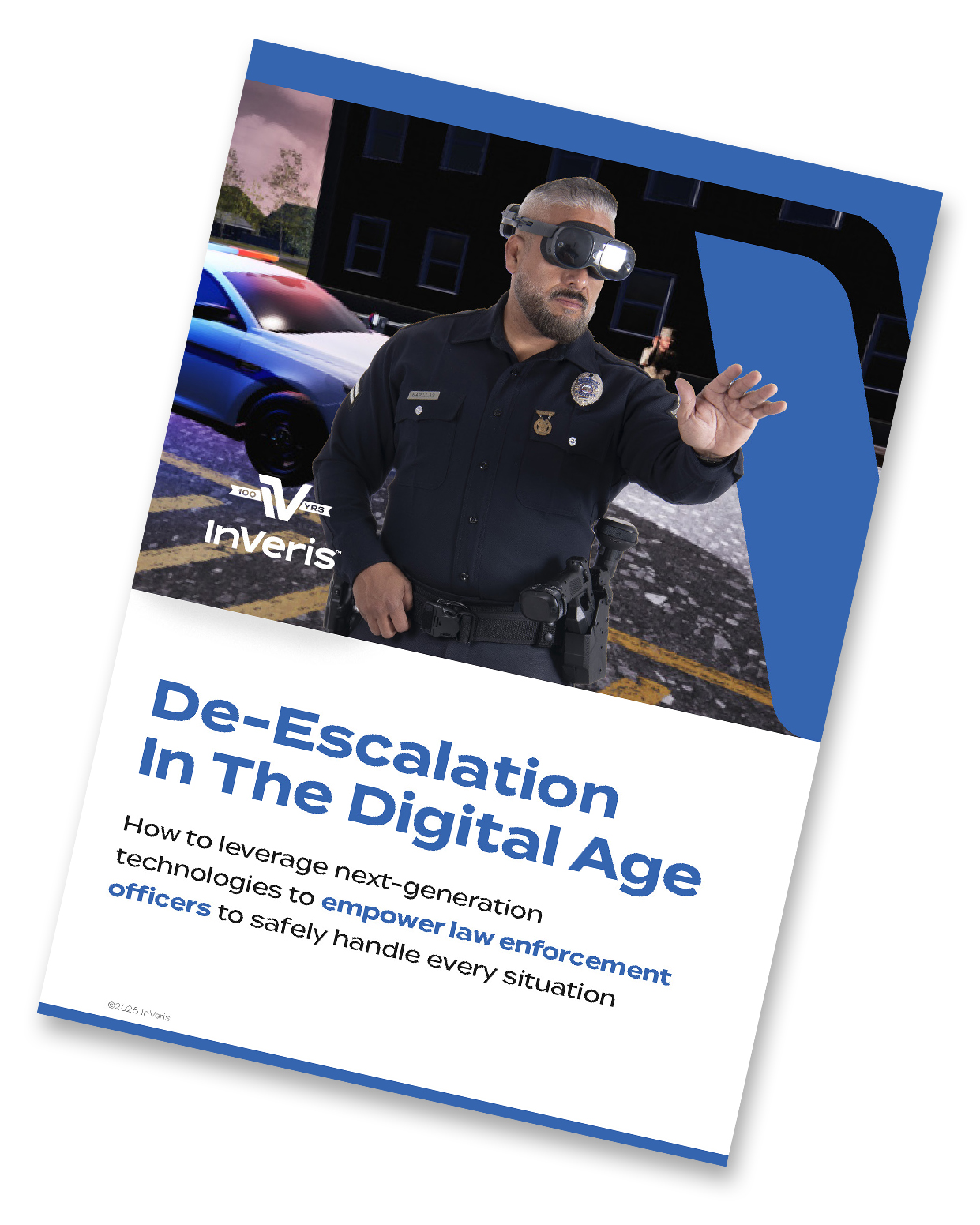
Fill in the form below and we'll send a link for you to download the White Paper to your inbox.