Category: Military17.02.2026
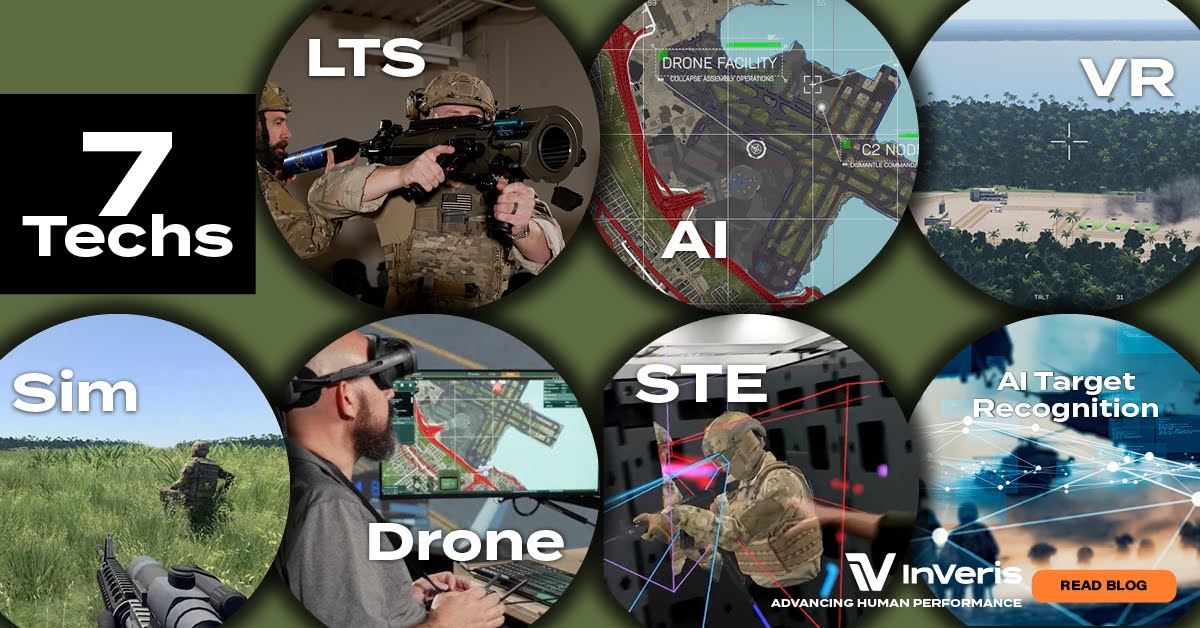
As the nature of warfare continues to evolve, the importance of cutting-edge military training technologies in enhancing combat readiness only grows more urgent. Military training technologies have developed extensively over the years, and their role in modernizing armed forces has been huge. Below, we’ll go over seven incredible training technologies that are reshaping combat readiness in the modern military!
Live Training Systems (LTS) are one of the military’s best new technologies for soldier development and readiness. LTS combines virtual and hybrid training to simulate realistic combat environments, utilizing realistic visual effects, instrumented feedback, and other tools to replicate complex, real-world scenarios in training. This helps soldiers address the many challenges of training for a variety of unique military operations.
LTS is a wide-ranging software that allows soldiers to use simulated versions of various weapons systems such as grenades, claymores, mortars, and Stingers. LTS mimics and prepares soldiers for the role of GPS and optical technologies, such as Stinger missile systems, in real-life combat. With the simulated electronic training of LTS, military instructors can keep soldiers safe at reduced cost.
LTS offers many benefits to trainees, including skills improvement and real-time progression in simulated environments. Positive outcomes from using realistic weapons systems in training include increased familiarity with weapons systems, better preparedness for military action, and improved reaction time based on prior experience.
Artificial intelligence is a growing tool worldwide, and is also being used in military training. AI can be used to create dynamic, unpredictable combat scenarios that enhance military training beyond the limitations of physical courses and exercises. AI has the unique ability to replicate complex combat variables and teach new warfare strategies.
With AI-integrated training, soldiers can interact with more realistic training settings and cost-effective training environments. The variety of scenarios that can be created with AI training helps enhance trainees’ situational awareness and threat detection by exposing them to many unpredictable variables that standard training cannot effectively replicate.
AI has many real-world military applications outside of training. Generative AI can be used for military simulations such as NLP applications, and AI also plays a role in naval wargaming, drone swarm intelligence, and tactical simulations, providing both data analysis and realistic scenario generation in the blink of an eye.
Virtual reality is another prominent frontier of military training tech. With VR, instructors can create realistic, immersive training environments that fully involve soldiers in complex operational simulations. Unlike standard training, which requires physical arenas, VRcan quickly replicate diverse terrains and complex combat situations, switching between scenarios with little need for tedious technical work.
VR can enhance training outcomes while also keeping soldiers safe from risky training injuries. With VR, trainees have the ability to simulate dangerous situations safely, without real-world risk. The safety and realism of VR technology improves trainee decision-making and tactical skills in high-pressure scenarios, and is also repeatable for even better memorization.
Simulation software enhanced with AI is giving the military more ability to analyze crucial data in real time. AI-driven software analyzes real-time data from trainees and past training regimens to create personalized training scenarios designed to promote individual and overall unit readiness. Adaptability and customization are vital to effective training simulations, and AI offers more adaptability and customizability than ever before.
AI-driven simulation software also reduces overall operational risk outside of training and in real-life combat. The use of virtual training environments leads to a marked reduction in real-life risks because soldiers are prepared for any scenario. Simulation software improves readiness by exposing soldiers to diverse situations that ready them for any eventuality, from an unexpected ambush to a large-scale tactical retreat.
There has been a steady increase in the use of drone swarms and AI-powered simulations for advanced training scenarios in recent years. This drone and swarm intelligence training enhances combat readiness in modern warfare by giving soldiers critical, unmanned aid for sensitive operations that could benefit from non-human participation.
In addition to the uses of drones in actual combat scenarios, the military can use them for sophisticated training exercises. Drone swarms can effectively provide simulations of real-world Russian military tactics through AI-driven drone swarming. Due to the growing role of unmanned aerial systems (UAS) in modern military strategy, it is vital that soldiers learn to work with, evade, and counter drones through dedicated training.
Military Synthetic Training Environments (STE) are a critical new technology changing the military landscape. STEs merge virtual and augmented reality with gaming technology to offer trainees highly-realistic and immersive training. By offering realistic training scenarios with repeatable objectives and real equipment integration, STEs can be used to structure collaborative operations among cross-functional teams (CFTs) from various military departments. By merging synthetic environments with real-world applications, STEs and CFTs can ready soldiers for a wide array of collaborative, tactical missions with various units or military branches.
Military agencies practice continuous evaluation of new technologies and participate in the ongoing development process of systems like STEs to ensure that soldiers are ready for any challenge. Through the collaboration of various Army stakeholders, technology integration is reaching new heights as different bodies of both the military and the private sector pool their knowledge to create new and better training. This ensures that, in the end, more lives will be saved and operations will succeed more frequently.
AI-Enhanced Intelligence is a major tool used to improve target recognition and situational awareness in combat. AI sensors and IoT devices such as enhanced applications, vehicles, and industrial equipment are contributing to better target recognition and threat monitoring. These systems automate tasks that previously required human input, increasing efficiency and allowing for faster, better results.
AI also has an evolving role in other military operations, including aviation maintenance and battlefield support. With AI, military technicians can make repairs more easily, while commanders can offer better data and support to soldiers. Leveraging AI technologies to improve overall readiness and safety is a key priority of the modern armed forces.
There are a wide variety of military training technologies revolutionizing combat readiness in the modern age. Technologies such as LTS, AI, VR, simulation software, drones, and STEs are making the future a reality and promoting better military outcomes. Technology plays a critical role in preparing armed forces for future challenges, and continued investment in the technologies listed above is paving the way to a world where soldiers are better-equipped for the pursuit of global peace.






Fill in the form below and we'll send a link for you to download the White Paper to your inbox.