Category: Military03.12.2025
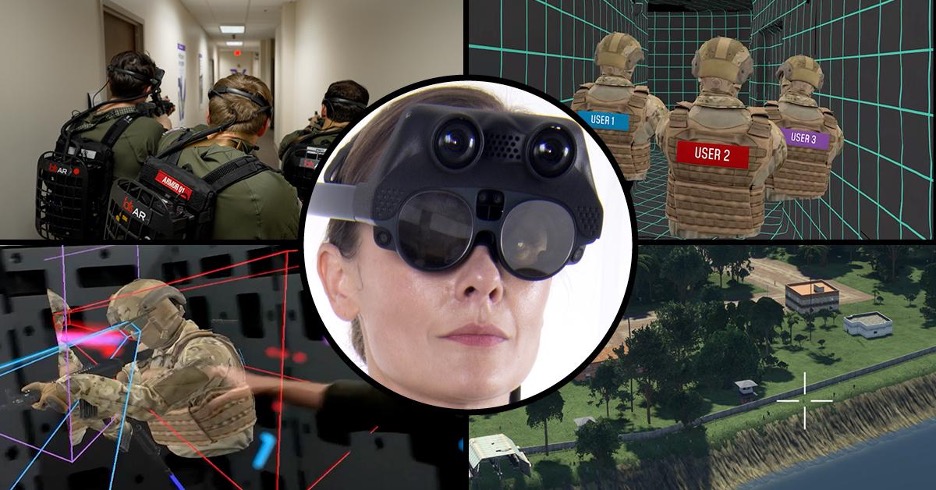
To prepare military personnel for the hazardous conditions they’ll be subject to in the line of duty, tactical military training exercises are vital. While there are a wide range of ways this can be achieved, modern military operations are heavily reliant on advanced technologies to design more efficient training methods for active military personnel and new recruits.
One of the technologies that’s increasingly valuable for military training exercises is Augmented Reality (AR). This technology allows government agencies to provide highly immersive and completely customizable experiences for personnel.
By integrating AR technology into environments that sharpen situational awareness, decision-making abilities, and tactical responses, military trainees receive a more comprehensive format for getting battle-ready in safer and highly portable training sessions.
Tactical Augmented Reality (TAR) is a more specific application of AR technology that’s often used in military training scenarios. It enables the use of smart glasses or head-up displays as well as handheld devices that replicate field equipment to create incredibly realistic training environments.
TAR technology provides real-time data on a soldier’s field of view that gives them more tactical information on a simulated battlefield, allowing them to make smarter and safer decisions. The ability for this technology to blend seamlessly with existing military equipment helps to add a level of realism that’s hard to mirror with other traditional training formats.
TAR technology is helpful for both air and ground forces. For example, military pilots are able to leverage TAR for providing critical flight data directly into their line of sight while flying. This can include navigational data, weather information, distance to targets, and mission objective statuses.
On the ground, TAR gives soldiers more tactical information about their surroundings and allows them to make more tactical decisions. Some of the common use cases for this technology include highlighting enemy positions on headgear equipment, isolating friendly units, and outlining potential hazards that should be avoided.
AR technology gives soldiers the real-time information they need to make better decisions when keeping themselves and their teams safe. Instead of needing to apply too much speculation when deciding when to engage or disengage, personnel can carry out their missions with much more precision while minimizing injuries or casualties.
Assistive technologies help to minimize the likelihood of human error in intense training and real-life scenarios. This leads to more effective communication between ground and air units and gives soldiers more confidence when entering foreign territories or hostile engagements.
With immediate access to details about their surroundings, AR technology enables soldiers to make quicker decisions when training for hazardous battlefield conditions. These decisions often mean the difference between life and death and can aid them in detailed threat analysis, strategic battlefield mapping, and enhanced combat effectiveness.
Additionally, because tactical information is shared seamlessly among trainees during various training exercises, it enables units to coordinate their actions and operate as a cohesive group. This is crucial for enhancing the likelihood of mission success in real-world scenarios.
AR can also sharpen a soldier’s core skills they’ll likely need when deployed. For example, when training in immersive AR environments, soldiers can receive quick feedback on each of their training elements. This includes firearms exercise by using advanced handheld devices that mimic the look, feel, sound, and feedback of a real weapon. After completing firing drills, soldiers get quick, immediate feedback on their accuracy and engagement statistics, helping them to improve their aim and weapon handling skills.
These training technologies can also enable highly realistic training sessions in a wide variety of combat-specific applications, all without having to rely on the added costs and potential danger when using live ammunition.
Blending physical environments and obstacles with immersive virtual elements, such as public areas, innocent bystanders, vehicles, or aircraft, provides a much more realistic simulation for trainees. Most of these elements would be too costly or hazardous to include in regular training sessions, but their use can significantly enhance the realism of sessions.
Typical applications for this technology include training soldiers to navigate virtual minefields, teaching tactical movements when traversing enemy territory, and reaching essential points of interest within specific timelines while withstanding simulated enemy fire.
When simulating a more complex mission, AR can deliver trainees real-time guidance they can use to safely meet certain objectives. For instance, soldiers could leverage visual overlays with step-by-step instructions from an overwatch team, helping them with equipment troubleshooting or strategy adjustments.
Being able to support this remote coordination effort with teams both in and out of training environments ensures that troops gain important high-level perspectives that can help them avoid obstacles and achieve critical objectives on time.
When needing to run maintenance procedures or complete emergency repairs on equipment in the field, AR can be beneficial for helping trainees learn how to diagnose and complete these repairs successfully during tactical exercises.
Soldiers can use an AR screen to overlay schematics or repair instructions directly onto the machinery they’re working on. This helps to turn more complex engineering tasks into easy-to-follow instructions. This eliminates the need to manually consult operating manuals or wait for more specialized technicians to arrive to address any issues.
Augmented reality has become an essential component of modern military training. It helps make tactical exercises more efficient, cost-effective, and realistic. It also prepares soldiers for the demands of their roles while maximizing safety and enabling them to retain more of the information they were trained on.









Fill in the form below and we'll send a link for you to download the White Paper to your inbox.