Category: Military12.02.2026
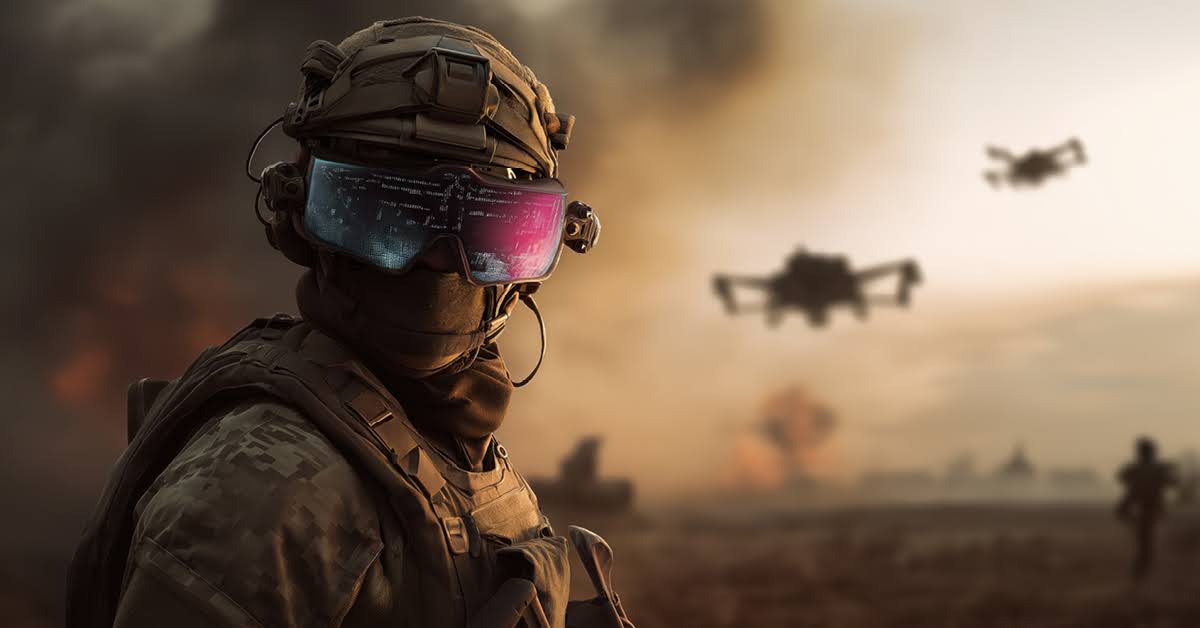
Augmented reality (AR) technology has played a transformative role in military training and operations. The evolution of AR from consumer tech such as social media filters and interactive captions to sophisticated military applications has promised to revolutionize the way war is waged in the future, saving both lives and money. In this article, we’ll go over how AR is redefining military training by discussing its key applications, innovations, advantages, and limitations.
In the years since the invention of augmented reality technology, the field has progressed immensely. Once restricted to basic visual applications, AR can now facilitate complex, mission-critical military training via a variety of innovative tools. AR has a long history in the military, beginning with the invention of reflector sights and early heads-up displays (HUDs) in the 1940s, progressing through more advanced helmet-mounted systems, and eventually reaching the modern era, where complex helmet-mounted displays (HMDs), Synthetic Training Environments (STEs), and the Integrated Visual Augmentation System (IVAS) have emerged.
Augmented reality is most vital for its various tactical applications in military training. The use of AR in fighter pilot training and battlefield operations has helped soldiers and trainees execute missions more effectively thanks to real-time tactical data. AR’s ability to overlay critical data such as GPS, thermal sight, and weapon targeting onto the visual field is a key advantage in various combat situations.
The most common use of AR on the battlefield is the heads-up display (HUD), a helmet-mounted system that assists soldiers in real time with navigation, aiming, and virtual training. The new HUD 3.0 model features critical enhancements over previous models, such as the Enhanced Night Vision Goggle–Binocular (ENVG-B), which allows for more effective combat training and better mission performance in the field due to enhanced visual capabilities.
AR plays a huge role in creating a more immersive and mentally challenging training experience. The army’s newly-developed Synthetic Training Environment (STE) combines AR, VR, and gaming technology to create a thoroughly immersive combat simulation which soldiers can use for collaborative training rehearsals. The STE is one of the many examples of how AR integrates with existing technologies to create enhanced mission rehearsals.
Another new development in military AR, the Augmented Reality Sandtable (ARES) is revolutionizing battlefield mapping and tactics. This interactive sand-filled table uses a projector and a motion-sensing camera to create a realistic, AR depiction of specific landscapes or terrain. ARES can be used for real-time battlefield representation and scenario modeling and includes features such as terrain generation and remote collaboration to help soldiers plan ahead and know what to expect from a battlefield.
Aside from individual displays and tactical mapping, AR is also making headway in the advancement of combat vehicles. AR is particularly useful in improving the 360-degree awareness of combat vehicles, which often suffer from reduced visibility due to the need for heavy armoring. New, AR-integrated combat vehicles such as the “Glass” Tank CV90 make use of external sensors to create transparent battle stations for operators, allowing vehicle operators to see the battlefield and remain safe like never before.
Augmented reality allows soldiers to enhance their real-time tactical awareness and targeting skills. The real-time data overlay provided by AR has immense benefits for tactical operations, as soldiers can now possess improved spatial awareness, understanding of terrain, knowledge of friendly and hostile positions, and clear communication with other units and command centers. This allows for much-improved operational readiness, which saves lives and improves mission effectiveness.
As with any technology, AR has a wide array of both advantages and limitations. The benefits of AR in a military context are manifold. Firstly, AR allows for enhanced situational awareness, improving soldiers’ operational and situational awareness with real-time targeting and mission execution support.
AR is also cost-effective and safer than traditional training methods. AR allows for a reduction in live training costs and risks through immersive simulations that are safe, controlled, and scalable, exposing soldiers to high-risk training scenarios without true danger. In addition to safety, AR is also known for its customizability, allowing instructors to tailor mission scenarios to various terrains and combat conditions and replicate complex combat environments for effective training.
Of course, AR is not without its challenges and limitations. One key drawback of AR is the risk of information overload. Sometimes, AR can deliver excessive data to soldiers, distracting them from mission objectives or confusing them in the moment, which is an obvious impediment to functional operations. AR also sometimes suffers from a lack of effective data structuring and unclear user interfaces, which can make it hard to learn and use.
There are also a number of concerns regarding AR’s security and the possibility of eventual overdependence upon technology. Potential risks related to communication and data storage in AR systems are concerning due to the increasing prevalence of cyber warfare, and on the whole there are worries about military reliance on AR technologies, as overdependence could stall military operations entirely in the event of an AR outage.
While AR is a promising new tool for military training and operations, more research and development is needed to improve AR technologies for military use. Militaries around the world, including in the United States, are hard at work making AR technology more sophisticated, investing in new scientific research to improve existing systems and make them more secure, safe to use, and effective. There is a great need for further innovation to expand the scope of AR applications, and research remains a top military priority.
The potential for combining AR with other cutting-edge technologies such as AI and drones shows great promise at enhancing training and operations. Future possibilities for AR in various military sectors, such as reconnaissance and command, rely upon the integration of developing technologies in the private sector. New military contracts with private companies promise to enhance AR with the aid of popular AI tools on the public market.
AR is a major force in the current redefinition of military training and operations. With the continued innovation and exploration of AR technology, the future of military readiness is bright. AR’s ability to modernize tactics and improve soldier performance is going to have a huge impact on the way war is waged, changing the landscape of international affairs entirely.












Fill in the form below and we'll send a link for you to download the White Paper to your inbox.